In short: so why pay for a website when there's AI?
You can build a website yourself with AI, and in some cases that's the right choice for the business. A professional brings experience in design, marketing, the customer journey, and SEO. They help define what the site needs to do, steer the tools, and check the result. The fee also covers the time the business owner saves and the responsibility for delivering the work that was agreed on.
I told him he was right. Completely. If he has the time, the bandwidth, and the desire to learn, he can build his own website.
I get where he’s coming from. I work with AI too, and it makes my life a lot easier. Things that used to take hours of work now go much faster. You can see an idea on the screen, change direction, and try again.
The question is what result you want, and what you need to know to get there.
You need to know what to ask for, and what to check
One thing I run into when working with AI is its tendency to pile things on. You ask it to improve a page, and you get another headline, another explanation, three more cards, and an FAQ section. Each addition can sound reasonable on its own. Put together, it sometimes gets hard to tell what the page is trying to say.
Other times, the exact opposite happens. The page looks clean and organized, but it’s missing information the customer needs to decide whether to get in touch.
Say a page goes on at length about quality, professionalism, and personal service. It all sounds good, but it still isn’t clear what the service includes, who it’s for, or what happens after you fill out the form. You can polish the wording ten more times, and the problem will still be there.
This is where experience comes in. I have to spot what’s missing, what doesn’t need to be there, and what order things should go in. Sometimes the best decision is to delete half a paragraph. Sometimes I need to stop and ask the business owner a question we haven’t asked yet.
In my work, I lead the AI: I give it context, weigh its suggestions, and steer the revisions. It also comes up with good ideas I hadn’t thought of. I have to know which ones to pick, and check how they work on the actual site.
How do you get past the design everyone has already seen?
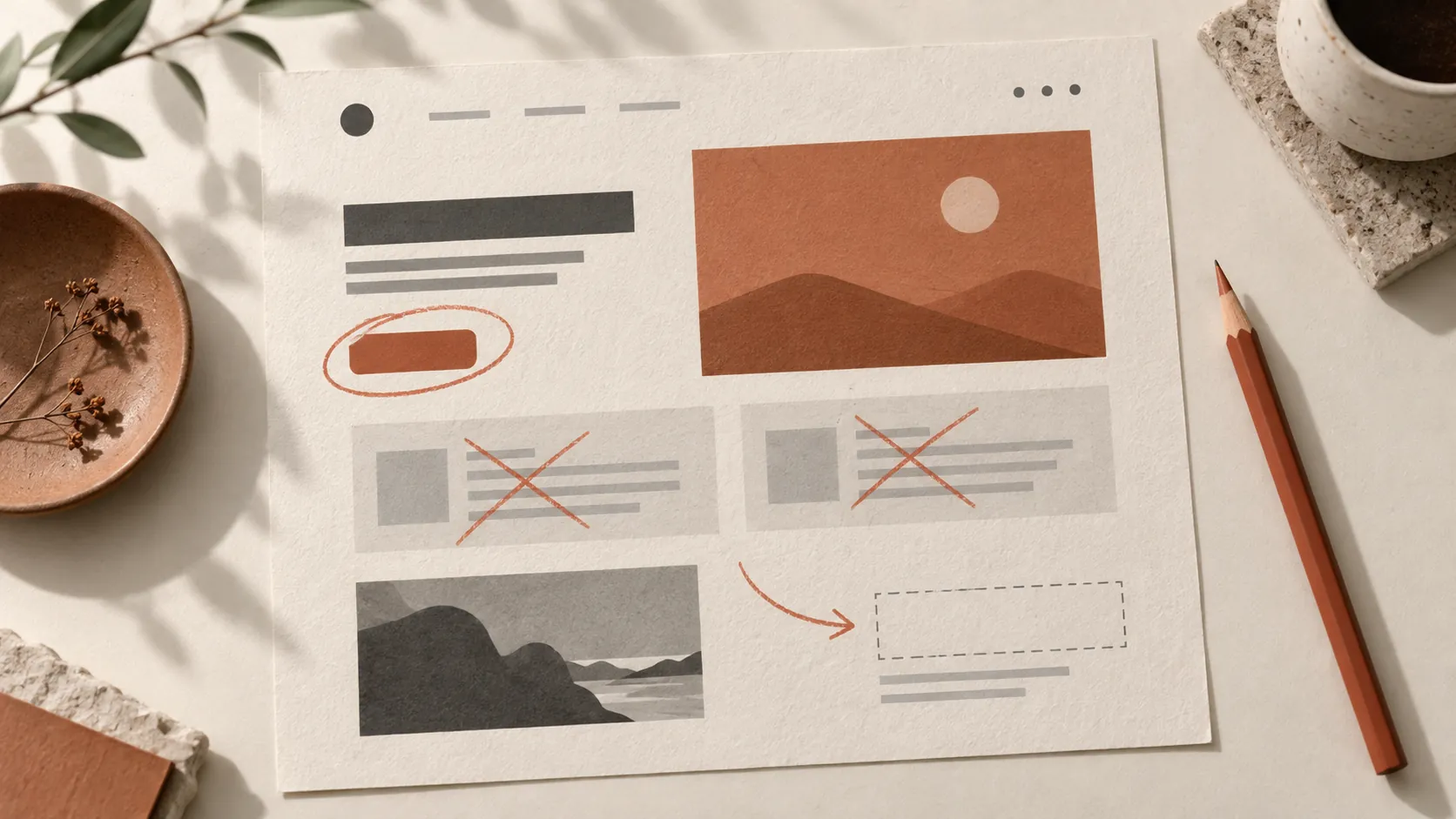
Then there’s what people call AI slop. In web design, I mean a result that feels too familiar: the same cards, the same effects, the same layout, with only the business name swapped out.
The first result can look impressive. But look at it a little longer, and it’s hard to say what about it belongs to this particular business.
Getting out of those templates takes work. You choose photos that fit, refine the typography, change the order of things, check the spacing, and decide where motion adds something and where it gets in the way. Then you open it on a phone to see how all those choices hold up on a small screen.
When I say something in a design isn’t sitting right, there’s usually a reason I can explain: a photo is pulling too much attention, an important headline is getting lost, or so many elements are competing that you no longer know where to look.
That eye develops over time. After you’ve seen, built, and changed a lot of websites, you bring that experience to every decision. AI makes it much easier to carry out a change, so I can keep refining until the design feels like it belongs to the client.

The decisions that start before the design
Business owners know their business better than I do. They know what customers ask, which jobs they want to get, and where things get stuck. Part of my job is to ask, listen, and translate that knowledge into a website.
There are questions I want answered right at the start. Which service matters most to promote? Who is the ideal customer? How do they find the site? What do they need to see to feel comfortable reaching out?
Say a contractor wants more full home remodels. If the website gives small repair jobs the same weight, it may send a different message than the one the business needs. Deciding what to feature affects the headline, the projects we show, the content, and even the questions on the form.
How the customer arrives matters too. Someone who was referred may want to see past work and get to know the person behind it. Someone meeting the business for the first time through Google also needs to understand what’s being offered and why it fits what they need.
That’s part of the customer journey: from the first encounter with the business to getting in touch. At every step, you need to give people the information that helps them move forward.
The same thinking goes into SEO. Which services need a page of their own? What are people searching for? Does the content answer them? How do the pages connect to each other? AI can help with the research and the writing, and the decisions have to tie back to what the business actually does.
The Maze Roofing project is an example of how those questions shape a real site. That’s where I think much of the value of experience lies: in connecting the business, the people who will come to the site, and the work on the screen.
I pay for things I could do myself, too
I have a cleaner come every two weeks, for example. In theory, I can clean the place myself. I’ve even tried a few times. But once I realized that cleaning behind the toilet takes the flexibility of an Olympic gymnast, plus making peace with things the human eye was never meant to see, I gave up. There’s a limit to what I’m willing to do, and that limit is exactly where the professionals take over.
Beyond the time and hassle it saves me, the result is usually better than what I manage on my own. As far as I’m concerned, that’s an excellent reason to pay for something I could, in principle, do myself.

Same with my motorcycle. I can do some of the maintenance myself, like changing the oil. But part of what a professional is worth is knowing what else to check, and catching something I might miss.
We make these decisions all the time: how much time to put into learning and doing the work, how well we can judge the result, and what’s worth handing to someone who does it every day.
With a business website, it’s worth counting the time after the first version too: fixes, content, testing, and updates. That time belongs in the math as well.
What’s right for your business right now?
If you’re just starting out, need a simple site, like to learn, and have the time to put in, building it yourself with AI may be a good fit. You can get a good result, and bring in a professional at the points where you need more knowledge or a second pair of eyes.
When a website has to support advertising, present a complex service, or help customers choose your business, it’s also worth asking who plans that path and who makes sure it works. The form has to deliver the message, the content has to be clear, and the site has to stay easy to use as you add more information to it.
I use AI because it lets me work faster, try more directions, and pay more attention to the details. But I bring my years in design, marketing, and understanding businesses into that process. The client gets the latest tools, along with the experience that steers them.
That’s my approach at 3Pines Studio, a web design studio. If you’re weighing how to approach your next website, let’s talk about your business and what the site needs to do for it.
Frequently asked questions
Can I build a website with AI if I have no experience?
Yes. You can use AI to create pages, write content, and develop a design with no background at all. You still have to put time into learning, preparing your materials, and testing. The more complex the site, the more knowledge and work it takes to finish it.
What does a professional add if they use AI too?
A professional helps define the site's goals, organize the content, develop a design that fits the business, and check the work. Their experience also shapes which solutions they choose, and helps them spot what's missing or not working well.
How can I tell if the website I built is actually good?
Ask someone who doesn't know your business to visit the site and explain what you offer and who it's for. Then check the path to getting in touch, submit the form, and open the site on a phone. A professional review can add a look at the content, accessibility, performance, and the SEO foundation.
Can I start on my own and bring in a professional later?
Yes. You can get help with discovery and planning, design, content, or a review of a site you've already started building. How much needs to change depends on the platform and the state of the site. If you plan to bring in a professional down the road, check ahead of time how the system you choose can be edited and expanded.
Can a website built with AI rank on Google?
Yes, but using AI doesn't guarantee rankings on its own. You need helpful, relevant content and a technical foundation that lets the search engine reach your pages and understand them. Google also stresses the need to check the accuracy and quality of content created with AI. See Google's guidance on using AI-generated content.